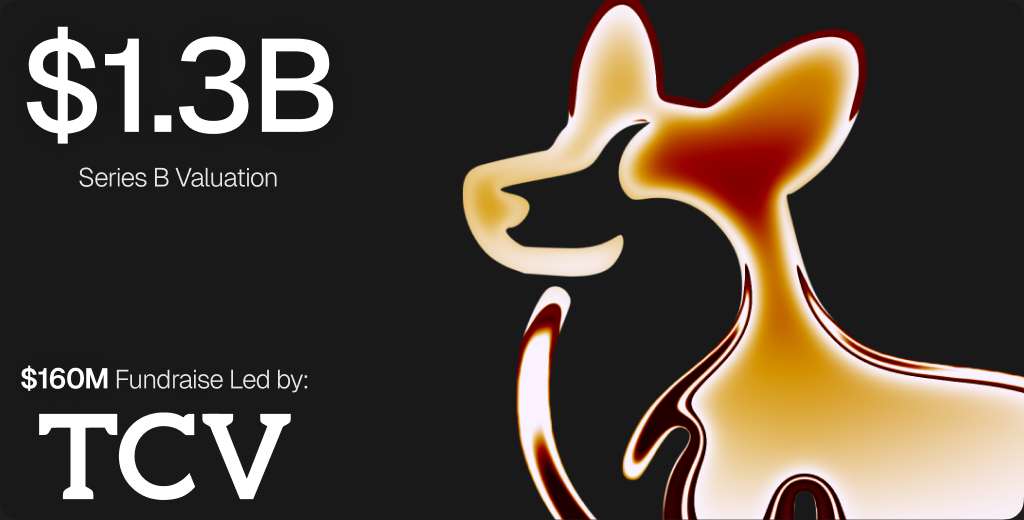
Announcing Our $108M Fundraise | Seed + Series A
Corgi

CGL Insurance for Startups

Every time someone visits your office, attends your event, or interacts with your physical space, there's a chance something goes wrong. Commercial General Liability is the foundational coverage that protects your company when a third party — someone who isn't your employee — gets hurt or has their property damaged because of your business operations. It's the policy most leases, contracts, and investors require you to have, and it's usually the first insurance a startup should buy.

Last reviewed April 24, 2026 · Reviewed by the Corgi Insurance team

Your business exists in the real world. CGL covers what happens when the real world goes sideways.

What's Actually Inside Your CGL Policy

Coverage structure under form CORG CGL 0100. Limits shown are illustrative and may differ from your issued policy. Important: The coverage descriptions on this page are general summaries for informational purposes only. They do not constitute a policy, binder, or guarantee of coverage. Coverage is provided only under the terms, conditions, exclusions, and limits of the issued policy. Always refer to your actual policy wording and declarations page for the governing terms and conditions. If there is any conflict between this summary and the policy, the policy controls.

FORM CORG-CGL-0100

Commercial General Liability

SELF-INSURED RETENTION:$2,000 per claim

Bodily Injury Liability

PER OCCURRENCE:$1,000,000

Property Damage Liability

AGGREGATE:$2,000,000

Damage to Premises

ANY ONE PREMISES:$100,000

Personal & Advertising Injury

PER OFFENSE:$1,000,000

Products / Completed Ops

AGGREGATE:$2,000,000

Medical Payments

ANY ONE PERSON:$5,000

Plain English on the Left. Policy Language on the Right.

What this policy pays for.

IF THIS HAPPENS…

A visitor trips over a cable in your office and breaks their wrist.1

Coverage A — Bodily Injury Liability

Your policy covers the legal defense and any settlement or judgment for third-party bodily injury arising from your premises or operations. The injured person's medical bills, lost wages, and pain-and-suffering claim are covered up to your per-occurrence limit. The insurer has a duty to defend covered claims, meaning defense counsel is appointed and paid for on your behalf, subject to the applicable retention.

AVAILABLE LIMITSUp to $1M per occurrence / $2M general aggregate

A competitor claims your latest ad campaign copied their slogan.2

Coverage B — Personal and Advertising Injury

If a third party alleges that your advertising activities caused harm — such as misappropriation of their advertising idea or slogan — your policy covers the defense and any resulting damages. This applies to claims made about your promotional content, not your product itself.

AVAILABLE LIMITSUp to $1M per occurrence (within the general aggregate)

Your team is demoing hardware at a trade show, and the prototype falls off the table and smashes another exhibitor's laptop.3

Coverage A — Property Damage Liability

When your business operations cause physical damage to someone else's tangible property, your CGL steps in to cover the repair or replacement costs, plus your legal defense. This applies to property you don't own, rent, or have in your care.

AVAILABLE LIMITSUp to $1M per occurrence / $2M general aggregate

Your CGL also includes Coverage C — Medical Payments for small third-party injuries on your premises or arising from your operations.4

Coverage C — Medical Payments

Your CGL also includes Coverage C — Medical Payments, a no-fault coverage that pays reasonable medical expenses for third parties injured on your premises or by your operations — regardless of whether you were negligent. It resolves small incidents (typically up to $5K–$10K per person) before they become lawsuits.

TYPICAL LIMIT$5K-$10K per person

Scenario notes

1

CGL is an occurrence-based policy underwritten by Technology Risk Retention Group, Inc. The insurer has a duty to defend covered claims. A per-occurrence retention (self-insured retention) applies — you are responsible for costs within the retention amount before the insurer's obligations attach. Refer to your Declarations page for your specific retention amount and limits.

2

Coverage B applies to enumerated "personal and advertising injury" offenses only. It does not cover claims arising from professional services, breach of contract, or knowing violations. Patent infringement is excluded. If your business is primarily internet- or media-based, Coverage B may be further limited — ask your advisor about the media and internet business exclusion.

3

The care, custody, or control exclusion applies: property in your possession, or property you are actively working on, is not covered under CGL. If your team is installing equipment at a client site and damages the equipment being installed, that scenario would not be covered.

4

Medical Payments (Coverage C) is a no-fault coverage with its own per-person limit, separate from the liability coverages. It applies to injuries on your premises or arising from your operations (including off-premises). It does not apply to your employees or to persons normally occupying the premises.

Policy notes

CGL does not cover professional errors or omissions, cyber incidents, employment disputes, auto accidents, or intentional acts. Products-completed operations has its own separate aggregate limit. Fines, penalties, and punitive damages are excluded from the definition of "Damages." Refer to your policy for complete exclusions.

Contractual liability coverage applies only to liability assumed in an "insured contract" as defined in the policy — primarily leases, easements, and agreements where you take on another party's legal liability for injuries or damages. General breach-of-contract claims are not covered.

The scenarios above are illustrative examples only and do not guarantee coverage for any specific claim. Actual coverage depends on the facts and circumstances of each claim and the specific terms of your issued policy. Results may differ based on policy endorsements, exclusions, limits, and applicable law.

How CGL Compares

CGL, Tech E&O, Cyber Liability each respond to a different claim trigger and coverage boundary.

CGL

What triggers it: Physical-world incidents — someone gets hurt or their property gets damaged Type of harm covered: Bodily injury, property damage, and certain advertising offenses Common scenario: Visitor slips in your office Key difference: Covers the physical world. If no one was injured and no tangible property was damaged, CGL probably isn't the right policy.

Tech E&O

What triggers it: Professional mistakes — your tech service or product causes a client financial harm Type of harm covered: Financial loss from errors, omissions, or negligent acts in your tech work Common scenario: Your analytics engine miscalculates, costing a client $500K in bad orders Key difference: Covers your professional work product. If the claim is about what you built or delivered, this is where it lives.

Cyber Liability

What triggers it: Data and network incidents — a breach or security failure leads to third-party claims Type of harm covered: Third-party liability from unauthorized access, data disclosure, or network failure Common scenario: Hackers steal 50K customer records and a class action follows Key difference: Covers the digital perimeter. If the claim involves unauthorized data access or network compromise, start here.

Industry Applicability & Compliance

Coverage Trigger

Coverage A — Bodily Injury Liability responds when a visitor trips over a cable in your office and breaks their wrist.

Policy Boundaries

CGL is an occurrence-based policy underwritten by Technology Risk Retention Group, Inc. The insurer has a duty to defend covered claims. A per-occurrence retention (self-insured retention) applies — you are responsible for costs within the retention amount before the insurer's obligations attach. Refer to your Declarations page for your specific retention amount and limits. Coverage B applies to enumerated "personal and advertising injury" offenses only. It does not cover claims arising from professional services, breach of contract, or knowing violations. Patent infringement is excluded. If your business is primarily internet- or media-based, Coverage B may be further limited — ask your advisor about the media and internet business exclusion.

Available Extensions

Available add-ons include Hired and Non-Owned Auto (HNOA) Endorsement, Waiver of Subrogation Endorsement, Additional Insured Endorsement. Endorsements are required where noted and availability may vary by jurisdiction and underwriting.

Available Add-ons

Hired and Non-Owned Auto (HNOA) Endorsement

Extends your CGL to cover liability when employees drive personal or rented vehicles on company business. If your team drives to client meetings, picks up supplies, or rents cars on work trips, this fills the gap between their personal auto insurance and your company's exposure. [Endorsement required — see HNOA product page]

Waiver of Subrogation Endorsement

Some landlords and clients require you to waive your insurer's right to recover costs from them after a claim. This endorsement satisfies that contractual requirement. [Endorsement required]

Additional Insured Endorsement

Adds your landlord, client, or business partner as an additional insured on your policy — a common requirement in commercial leases and service agreements. [Endorsement required]

Our Core Coverages

CGL is the foundation. Layer in Tech E&O, Cyber, D&O, and more — modular coverage that grows with you.

Commercial General Liability (CGL)
Instant quote

Commercial General Liability (CGL)

Protects your business against third-party claims for bodily injury, property damage, and personal or advertising injury arising from your operations.

Cyber Liability
Instant quote

Cyber Liability

Protects against losses and claims resulting from data breaches, cyberattacks, and network security failures.

Tech & AI Liability
Instant quote

Tech & AI Liability

Covers claims alleging your technology products or services failed to perform as intended, causing financial harm to a client.

Directors & Officers
Instant quote

Directors & Officers

Covers claims made against company leaders for alleged wrongful acts in managing the business.

Employment Practices Liability (EPLI)
Instant quote

Employment Practices Liability (EPLI)

Protects against claims alleging wrongful termination, discrimination, harassment, or other employment-related issues.

Fiduciary Liability
Instant quote

Fiduciary Liability

Protects your company and plan fiduciaries against claims alleging mismanagement of employee benefit plans, including retirement and health plans.

Media Liability
Instant quote

Media Liability

Protects against claims arising from your published or distributed content, including allegations of defamation, copyright infringement, or invasion of privacy.

Hired and Non-Owned Auto (HNOA)
Instant quote

Hired and Non-Owned Auto (HNOA)

Provides liability coverage when employees use rented or personal vehicles for company business.

See specialized coverages

CGL Glossary

Key terms from the policy language and approved coverage summary.

Occurrence
A single accident or event, including continuous or repeated exposure to the same harmful conditions. CGL is "occurrence-based," meaning it covers events that happen during the policy period, regardless of when the claim is filed.
Bodily Injury
Physical harm, sickness, or disease sustained by a person, including death resulting at any time. Stand-alone emotional distress without physical injury is not bodily injury under CGL.
Property Damage
Physical injury to tangible property, including the loss of use of that property. A smashed laptop counts. Corrupted data does not — electronic data is not tangible property under this policy.
Products-Completed Operations
Coverage for bodily injury or property damage arising from your product or completed work after it has left your possession or the job is done. Has its own separate aggregate limit within the policy.
Sublimit
A limit within the policy that caps coverage for a specific type of claim at a lower amount than the overall policy limit. Sublimits are part of, not in addition to, the aggregate limit.
Duty-to-Defend
The insurer's obligation to provide and pay for your legal defense when a covered claim is made. This is different from a duty-to-reimburse model (used in D&O), where you select your own counsel and the insurer reimburses costs.
General Aggregate
The maximum total your policy will pay for all covered claims in a single policy period, excluding certain categories like products-completed operations. Once you hit the aggregate, the policy stops paying.
Per-Occurrence Limit
The most your policy will pay for any single occurrence. If a $2M judgment comes out of one event and your per-occurrence limit is $1M, the policy pays $1M.
Insured Contract
A specific category of contracts where your CGL covers liability you've assumed from someone else. Leases are the most common example. A standard SaaS agreement is generally not an insured contract.
Retention (Self-Insured Retention / SIR)
The amount you pay out of pocket before your insurance kicks in. Think of it as a deductible, but typically you manage the claim until you hit the retention amount.

FAQ

Every time someone visits your office, attends your event, or interacts with your physical space, there's a chance something goes wrong. Commercial General Liability is the foundational coverage that protects your company when a third party — someone who isn't your employee — gets hurt or has their property damaged because of your business operations. It's the policy most leases, contracts, and investors require you to have, and it's usually the first insurance a startup should buy.
Common covered scenarios include: A visitor trips over a cable in your office and breaks their wrist. A competitor claims your latest ad campaign copied their slogan. Your team is demoing hardware at a trade show, and the prototype falls off the table and smashes another exhibitor's laptop. Your CGL also includes Coverage C — Medical Payments for small third-party injuries on your premises or arising from your operations.
CGL is an occurrence-based policy underwritten by Technology Risk Retention Group, Inc. The insurer has a duty to defend covered claims. A per-occurrence retention (self-insured retention) applies — you are responsible for costs within the retention amount before the insurer's obligations attach. Refer to your Declarations page for your specific retention amount and limits. Coverage B applies to enumerated "personal and advertising injury" offenses only. It does not cover claims arising from professional services, breach of contract, or knowing violations. Patent infringement is excluded. If your business is primarily internet- or media-based, Coverage B may be further limited — ask your advisor about the media and internet business exclusion. The care, custody, or control exclusion applies: property in your possession, or property you are actively working on, is not covered under CGL. If your team is installing equipment at a client site and damages the equipment being installed, that scenario would not be covered.
Available add-ons include Hired and Non-Owned Auto (HNOA) Endorsement, Waiver of Subrogation Endorsement, Additional Insured Endorsement. Coverage applies only when the relevant endorsement or separate policy is issued.

Can’t find an answer to your question? Get in touch

Industries that need General Liability