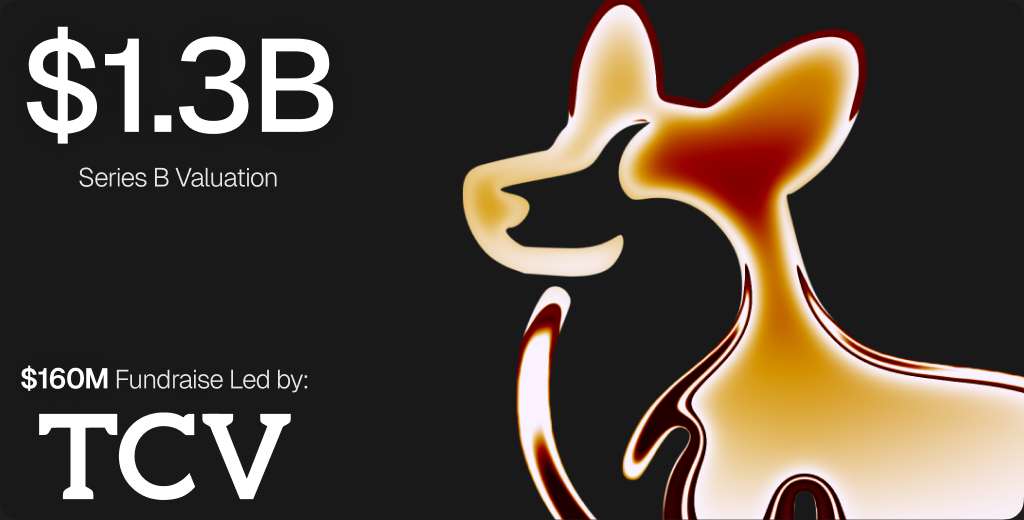
Announcing Our $108M Fundraise | Seed + Series A
Corgi

Fiduciary Liability Insurance for Startups

Fiduciary liability insurance defends plan sponsors, trustees, and benefits committees against ERISA fiduciary breach claims tied to managing employee benefit plans — 401(k) retirement plans, health and welfare programs, equity vesting schedules, and ESPPs.

Last reviewed April 24, 2026 · Reviewed by the Corgi Insurance team

Launching a 401(k) or self-funding a health plan turns founders, finance leads, and HR managers into ERISA fiduciaries — exposed personally to participant class actions and DOL enforcement. Fiduciary liability is the policy that defends them when a benefits decision is challenged years later.

Anatomy of a $1M / $1M / $25K Fiduciary Liability Policy.

Pulled from the actual form

FORM CORG-FL-0100

Fiduciary Liability

SELF-INSURED RETENTION:$25,000 per claim

Per Claim Limit

PER CLAIM:$1,000,000

Aggregate Limit

POLICY YEAR:$1,000,000

Defense Costs

PAID WITHIN LIMIT:Included

ERISA §502(c) Penalties

SUBLIMIT:$100,000

HIPAA Civil Penalties

SUBLIMIT:$100,000

Retention

PER CLAIM:$25,000

Plain English on the Left. Policy Language on the Right.

What this policy pays for.

IF THIS HAPPENS…

An ex-employee alleges the 401(k) had imprudent investment options and excessive recordkeeping fees.1

Imprudent investment & excessive fee claims

Defense costs and indemnity for ERISA Section 404 prudence and loyalty claims alleging the plan sponsor selected or retained imprudent investment options, share classes, or paid unreasonable recordkeeping, advisory, or revenue-share fees.

PER CLAIM$1M
AGGREGATE$1M
RETENTION$25K

The DOL opens an investigation into how you supervised your third-party 401(k) recordkeeper.2

DOL & regulatory investigations

Pre-claim inquiry costs and formal investigation defense by the Department of Labor, IRS, or HHS for alleged failures to monitor and oversee third-party plan administrators, recordkeepers, and investment advisers.

PRE-CLAIMSublimit
FORMALFull Limit

A contractor sues claiming they were misclassified and wrongly denied 401(k) and health-plan participation.

Plan eligibility & participation disputes

Coverage for claims alleging wrongful denial of plan benefits, misapplication of eligibility rules, or improper exclusion from a 401(k), health, or welfare plan — including misclassification-driven exclusions of contractors and part-time workers.

PER CLAIM$1M
ENTITY DEDUC.$25K

A class of employees alleges the company stock held in the plan was an imprudent investment.3

Stock-drop & employer securities suits

Coverage for ERISA stock-drop claims alleging fiduciaries continued to offer or hold employer securities (including private-company stock funds and ESOP holdings) when they knew or should have known the stock was imprudent.

PER CLAIM$1M

A former employee sues alleging your group health plan mishandled their PHI and denied a claim improperly.

HIPAA & welfare plan administration

Defense for claims tied to administration of group health, dental, vision, life, and disability plans — including HIPAA privacy and security violations, wrongful claim denials, and failure-to-disclose plan documents.

HIPAA SUBLIMIT$100K

Plan participants allege the ESPP and equity-vesting plan were administered in violation of the plan documents.

ESPP & equity plan administration

Coverage for fiduciary claims tied to administration of qualified and non-qualified equity plans, ESPPs, and vesting schedules — including allegations of improper grant administration, accelerated vesting decisions, and conflicts of interest.

EQUITY EXTENSIONIncluded
1

Fiduciary liability insurance covers fiduciary functions only. Settlor functions — the design and amendment of the plan itself — are excluded under most policy forms, though defense costs for allegations that blur the two are typically advanced.

2

Pre-claim inquiry costs are sublimited and apply to fiduciaries in their capacity as such. Personal liability of plan fiduciaries is the core trigger; plan-sponsor entity coverage is provided where the entity is named as a co-defendant.

3

Stock-drop coverage for private-company employer securities is subject to additional underwriting and may be sublimited or excluded entirely on plans that hold concentrated employer stock above stated thresholds.

How Fiduciary compares to EPLI and D&O

Fiduciary, EPLI, and D&O each handle a different category of liability. Most companies that offer benefits end up with all three.

Fiduciary Liability (this policy)

Personal protection for plan sponsors, trustees, administrators, and committee members against ERISA fiduciary breach claims. Defends decisions about investment lineups, recordkeeper selection, fee oversight, eligibility administration, and plan governance. Required once a startup launches a 401(k) or self-funds a health plan.

Employment Practices Liability (EPLI)

Defends the company and its leaders against employee claims of wrongful termination, harassment, discrimination, and retaliation. Overlaps with Fiduciary on benefits-related claims — Fiduciary covers ERISA-governed plan disputes, EPLI covers non-ERISA employment grievances. Most growth-stage startups carry both.

Directors & Officers (D&O)

Defends directors and officers against claims tied to management decisions, fiduciary duty to shareholders, and securities allegations. D&O covers corporate governance; Fiduciary covers ERISA plan governance — distinct duties under distinct statutes. Both attach when an executive is named in a benefits-related class action.

Industry Applicability & Compliance

Plan Sponsor Trigger

Fiduciary liability becomes essential the moment a startup adopts a 401(k), establishes a self-funded health plan, or grants equity through an ESPP or non-qualified deferred compensation arrangement. ERISA fiduciary duties attach to anyone exercising discretion — not only the formal trustee — so finance leads, HR managers, and benefits committees all share personal exposure.

ERISA Compliance

The policy structure (claims-made coverage with defined fiduciary capacity, breach triggers, and HIPAA / Section 502(c) sublimits) supports compliance obligations under ERISA, the Internal Revenue Code, the Affordable Care Act, and the SECURE Act 2.0. Coverage responds to DOL audits, IRS examinations, HHS Office for Civil Rights HIPAA inquiries, and participant-initiated class actions.

Industry Use Cases

Fiduciary liability is designed to respond to claims arising from 401(k) fee litigation, mismanaged recordkeeper transitions, COBRA notice failures, HIPAA breaches, ESPP administration disputes, and ESOP valuations — making it the foundational benefits-governance policy for any company that offers retirement, health, or equity programs to its workforce.

The six claims Fiduciary defends.

Imprudent Investments & Excessive Fees

401(k) class actions alleging the plan offered imprudent investment options, retained expensive share classes, or paid unreasonable recordkeeping and advisory fees in violation of ERISA prudence duties.

Failure to Monitor Administrators

Claims that fiduciaries failed to supervise or replace third-party recordkeepers, TPAs, advisers, or actuaries. The duty to monitor extends to every appointed service provider over the life of the plan.

Eligibility & Participation Disputes

Suits alleging wrongful exclusion from 401(k) or health-plan coverage — including misclassification of contractors, denial of part-time eligibility, and failure to follow plan-document terms on enrollment.

Stock-Drop & Employer Securities

ERISA stock-drop suits alleging fiduciaries continued to offer or hold employer securities — including private-company stock funds and ESOP holdings — when they knew or should have known the stock was imprudent.

HIPAA & Health Plan Administration

Claims alleging HIPAA privacy or security violations, wrongful denial of medical or mental-health-parity claims, and failures in the administration of group health, dental, life, or disability plans.

ESPP & Equity Plan Allegations

Allegations that ESPPs, RSU vesting, and non-qualified deferred compensation arrangements were administered inconsistently with plan documents — including improper acceleration, conflicts of interest, and disclosure failures.

Our Core Coverages

Fiduciary attaches to the benefits side of your business. Layer in CGL, Tech E&O, Cyber, EPLI, D&O, and more — modular coverage that grows with your headcount and benefits stack.

Commercial General Liability (CGL)
Instant quote

Commercial General Liability (CGL)

Protects your business against third-party claims for bodily injury, property damage, and personal or advertising injury arising from your operations.

Cyber Liability
Instant quote

Cyber Liability

Protects against losses and claims resulting from data breaches, cyberattacks, and network security failures.

Tech & AI Liability
Instant quote

Tech & AI Liability

Covers claims alleging your technology products or services failed to perform as intended, causing financial harm to a client.

Directors & Officers
Instant quote

Directors & Officers

Covers claims made against company leaders for alleged wrongful acts in managing the business.

Employment Practices Liability (EPLI)
Instant quote

Employment Practices Liability (EPLI)

Protects against claims alleging wrongful termination, discrimination, harassment, or other employment-related issues.

Fiduciary Liability
Instant quote

Fiduciary Liability

Protects your company and plan fiduciaries against claims alleging mismanagement of employee benefit plans, including retirement and health plans.

Media Liability
Instant quote

Media Liability

Protects against claims arising from your published or distributed content, including allegations of defamation, copyright infringement, or invasion of privacy.

Hired and Non-Owned Auto (HNOA)
Instant quote

Hired and Non-Owned Auto (HNOA)

Provides liability coverage when employees use rented or personal vehicles for company business.

See specialized coverages

Fiduciary Glossary

Key terms that appear in ERISA filings, plan documents, and policy language.

ERISA
The Employee Retirement Income Security Act of 1974 — the federal statute that governs employer-sponsored retirement and welfare benefit plans. ERISA imposes fiduciary duties of prudence, loyalty, and diversification on anyone who exercises discretionary authority over plan assets or administration.
Fiduciary Duty
Under ERISA Section 404, fiduciaries must act solely in the interest of plan participants, with the care of a prudent expert, by diversifying investments and following plan documents. Breach of these duties is the core trigger of every fiduciary liability claim.
Plan Administrator
The person or entity responsible for the day-to-day operation of an ERISA plan — typically the plan sponsor itself or a benefits committee. The plan administrator owes fiduciary duties for administrative discretion: eligibility determinations, claim adjudications, and disclosures to participants.
Settlor vs Fiduciary Functions
Settlor functions are decisions to establish, amend, or terminate a plan — these are business decisions, not fiduciary acts, and are not covered. Fiduciary functions are decisions made while administering an existing plan. The line between the two is often litigated and forms a key coverage boundary.
Prohibited Transaction
ERISA Section 406 prohibits self-dealing transactions between a plan and parties in interest — including the employer, fiduciaries, and service providers. Excise taxes under IRC Section 4975 and DOL penalties attach to prohibited transactions, both of which can be insurable losses depending on the policy.
Stock Drop Litigation
Class actions under ERISA alleging that fiduciaries continued offering or holding employer securities in a participant-directed plan despite knowing the stock was imprudent. Tightened by the Supreme Court's Dudenhoeffer decision; remains the highest-severity exposure under fiduciary policies.
ERISA Section 502(c) Penalties
Civil penalties for failure to provide required disclosures to plan participants — including summary plan descriptions, summary annual reports, and Form 5500 filings. Fiduciary policies typically provide a sublimit for these penalties, separate from defense and indemnity for the underlying claim.

FAQ

Fiduciary liability insurance protects plan sponsors, trustees, administrators, and benefits committees against personal liability for breaches of fiduciary duty under ERISA. It defends claims alleging imprudent investment selection, excessive fees, failure to monitor service providers, eligibility mistakes, HIPAA violations, and stock-drop allegations. With Corgi, a standard fiduciary policy provides $1M aggregate limits with built-in ERISA Section 502(c) and HIPAA sublimits — and it is the policy that pairs naturally with the rest of your startup insurance stack once you launch a 401(k).
No. An ERISA fidelity bond (required by Section 412) covers loss to the plan from fraud or dishonesty by people who handle plan assets — it protects the plan, not the fiduciaries. Fiduciary liability insurance covers the fiduciaries personally for breach-of-duty claims and is purchased by the plan sponsor with corporate funds. Most companies need both, and Corgi can quote them together in a single underwriting flow.
The trigger is launching a benefit plan governed by ERISA — most commonly a 401(k), a self-funded or level-funded health plan, or a broad equity program with administrative discretion. Once that plan exists, fiduciary duties attach to anyone with authority over it. See our stage-by-stage cost breakdown for typical limits at each round — fiduciary is usually added at the same time the company hires its first benefits manager.
Settlor functions are business decisions to adopt, amend, or terminate a plan — they are not fiduciary acts and are not covered by fiduciary liability insurance. Fiduciary functions are decisions made while administering an existing plan, including investment selection, recordkeeper monitoring, and eligibility determinations. The line between the two is the most heavily litigated coverage question in fiduciary policies, and most modern forms advance defense costs even when settlor versus fiduciary status is in dispute.
No, except where the employment dispute touches an ERISA-governed benefit plan. Wrongful termination, harassment, and retaliation are covered by Employment Practices Liability (EPLI). Fiduciary liability picks up benefits-specific claims — wrongful denial of plan participation, breach of duty in plan administration, and ERISA Section 510 retaliation for exercising plan rights. Corgi recommends bundling both once you launch a 401(k) or group health plan.
For seed-stage startups with a newly launched 401(k), fiduciary liability typically costs $1,500–$3,500 per year for $1M aggregate limits. Series A companies pay $3,500–$8,000 for $1M–$3M limits, and growth-stage startups with self-funded health plans or material employer-stock holdings pay $8,000–$25,000+ for $3M–$10M limits. See the full cost-by-stage breakdown — Corgi provides instant fiduciary quotes alongside the rest of your stack.
They cover different statutory duties. Directors & Officers (D&O) covers fiduciary duties owed to shareholders under state corporate law and federal securities law. Fiduciary liability covers fiduciary duties owed to plan participants under ERISA. A D&O policy typically excludes ERISA claims; a fiduciary policy typically excludes shareholder securities claims. Both belong in the stack of a venture-backed company that offers a 401(k).
Yes. Corgi's fiduciary policy automatically covers all past, present, and future trustees, plan administrators, benefits-committee members, and employees acting in a fiduciary capacity. This includes finance, HR, and operations leaders who hold administrative discretion over plan operations — not only those with a formal trustee title. The policy responds whether the named defendant is the company, the committee, or an individual fiduciary.
Corgi's fiduciary policy includes a HIPAA civil-penalty sublimit that responds to investigations and enforcement actions by HHS Office for Civil Rights for alleged privacy or security violations in the administration of an ERISA-governed group health plan. Coverage attaches to fiduciaries, the plan, and the plan sponsor as named defendant. Read more about how this fits into the broader benefits governance stack in our founder-focused coverage guide.

Can’t find an answer to your question? Get in touch

Industries that especially need Fiduciary Liability